Hempcrete Internal Insulation for Solid Brick Homes: A Practical Retrofit Playbook
A step-by-step guide to upgrading pre-1940 solid brick walls with hemp-lime (hempcrete) internal insulation. Learn the materials, risks, detailing, performance, and costs—explained in clear, builder-friendly terms.
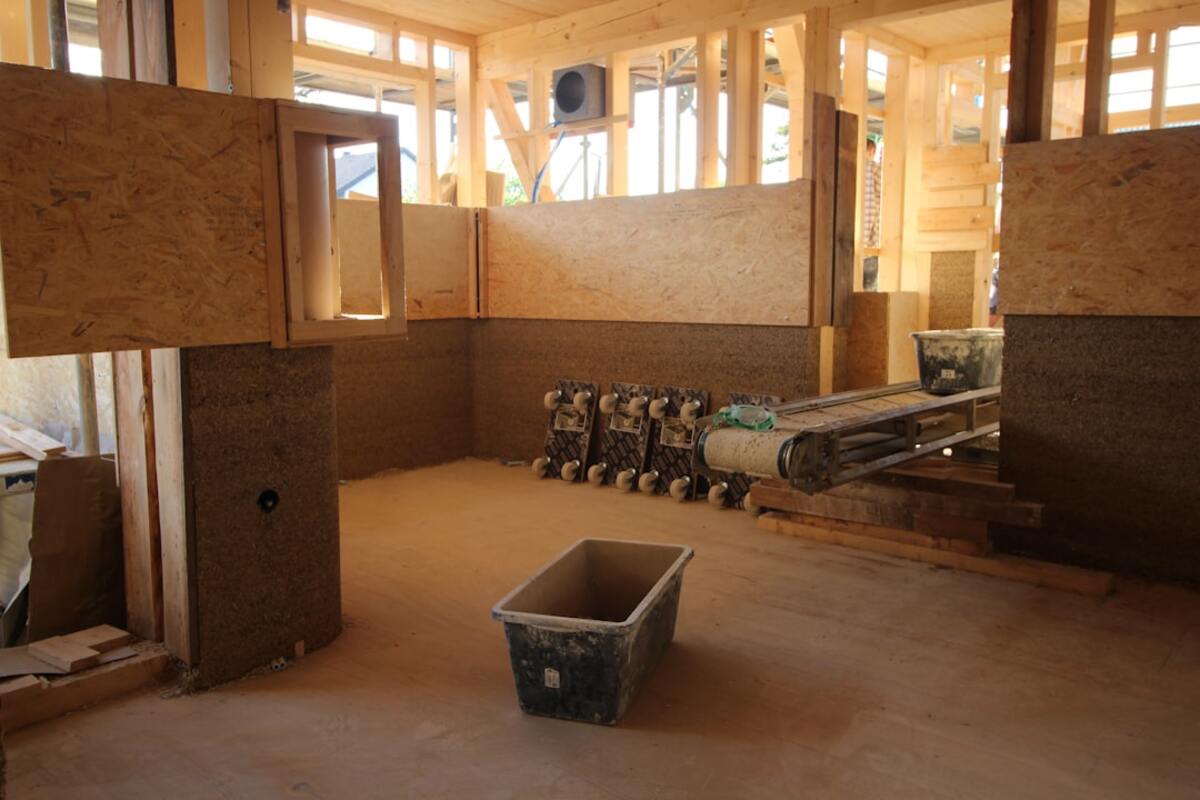
- Hempcrete adds insulation without trapping moisture in solid masonry, if detailed vapor-open.
- Success depends on prep: fix rain entry, test salts, specify lime-based finishes, allow long drying.
- Plan a continuous layer, service cavities, and capillary breaks to reduce mold and freeze–thaw risk.
Solid brick and stone homes built before mid-century are beautiful, resilient, and often painfully cold. Many owners hesitate to insulate from the inside because of mold, spalling, or trapped moisture fears. Hemp-lime, commonly called hempcrete, has re-emerged as a trending internal insulation for these historic walls: it insulates modestly, soaks up and releases humidity, and remains vapor-open enough for masonry to dry. This guide explains how hempcrete works in solid wall retrofits, and lays out a practical, field-tested plan to execute an internal insulation upgrade without creating new moisture problems.
Unlike foam boards or closed-cell spray foam, hempcrete is a non-structural, bio-aggregate mix of hemp shiv (the woody core of the hemp stalk) and a mineral binder based on lime. When placed against a masonry wall, the mixture forms a monolithic, fire-safe, and vapor-permeable layer that buffers humidity and reduces heat loss. It does not trap dampness, provided you detail the assembly to stay vapor-open from the interior and keep bulk water out from the exterior.
What hempcrete actually does in a masonry retrofit
To get hempcrete right, it helps to understand its behavior. Hemp-lime mixes are relatively light, with thermal conductivities typically in the 0.07–0.12 W/m·K range depending on density and binder. That equates to roughly R-1.7 to R-2.3 per inch (imperial). It will not turn a solid brick wall into a superinsulated envelope; its power is a different combination: moderate insulation, excellent moisture buffering, and compatibility with historic materials.
Moisture buffering is key. Hempcrete is capillarity-active and vapor-permeable. It can absorb indoor humidity spikes (showers, cooking) and later release that moisture without creating condensation pockets—if interior finishes remain vapor-open (lime plaster, clay plasters, mineral paints). Because hempcrete is a poor air barrier by itself, you still need a strategy to limit unintended air leakage, often via the plaster finish or an airtight lime layer. The big win here is avoiding a cold, impermeable layer at the brick interface, which can trap moisture and invite freeze–thaw spalling in climates with sub-freezing winters.
Hempcrete is non-structural. Treat it as insulation and hygric buffer, not as a load-bearing element. Heavy cabinets, radiators, or wall-hung fixtures should be supported by the substrate (masonry) or by a wood/steel service frame decoupled from the thermal layer with careful detailing to limit thermal bridging.
Finally, hempcrete is slow. It installs quickly but cures and dries over weeks, not days. Plan your schedule accordingly, especially in cool or humid seasons.

Plan, test, and detail: step-by-step execution
Before you order a single bag of binder, follow a structured process. Most hempcrete failures trace to skipping exterior repairs, ignoring salts, or finishing with impermeable coatings.
1) Investigate and fix water first. Survey the exterior envelope for roof leaks, cracked parapets, missing flashings, open mortar joints, failed sills, and clogged gutters. Hempcrete cannot compensate for bulk water entry. Repoint with lime mortar where needed. Cement-rich tuckpointing can trap moisture; avoid it.
2) Screen for salts and moisture patterns. Use moisture meters (both pin and dielectric) to map baselines. Take a few sacrificial mortar samples for salt testing (chlorides, nitrates, sulfates) if you suspect rising damp or prior de-icing salt exposure. Significant salts drive moisture migration and can damage plaster. In high-salt zones, consider a sacrificial lime render or a capillary break at the base before installing hempcrete.
3) Choose the right mix. Typical interior mixes use hemp shiv with a lime-based binder: natural hydraulic lime (NHL 3.5 or 5) blended with hydrated lime and pozzolans (e.g., metakaolin) for strength and curing control. Commercial pre-formulated hemp-lime binders simplify this. Denser mixes insulate less but are more robust; lighter mixes insulate better but need careful forming. For 1 m³ of fresh hempcrete, expect ballpark inputs: 110–160 kg binder, 100–120 kg hemp shiv, and 180–220 L water, adjusted for product specifics and ambient conditions. Always follow your binder manufacturer’s technical sheet.
4) Thickness and thermal target. For pre-1940 solid brick, 75–120 mm (3–5 in) is a common interior thickness that boosts comfort without overshooting freeze–thaw risk. More thickness offers diminishing returns unless the exterior is exceptionally well-sheltered and the brick is resilient. In cold climates, model the assembly with a hygrothermal tool, but validate with reasonable safety margins because simulations depend heavily on inputs you cannot know perfectly.
5) Base detail and capillary control. At floor level, stop rising damp from wicking into the new hempcrete. Options include a capillary break at the base (e.g., foam glass gravel plinth, a ventilated base trim, or a dense lime base coat with a small stand-off). If the slab is new or being replaced, add capillary breaks and perimeter insulation thoughtfully so the wall base can breathe and shed moisture inward.
6) Interior finishes must stay vapor-open. Do not paint hempcrete or lime plaster with acrylic or vinyl paints. Use lime plaster and mineral or limewash finishes with high vapor permeability. This keeps the drying pathway open to the interior year-round.
7) Service cavity and air control. Avoid burying wires and boxes directly in the hempcrete. A slim service batten (e.g., 25–38 mm) over the cured hempcrete allows wiring without puncturing your air- and vapor-open plaster surface repeatedly. If you need an air control layer, a tight lime plaster base can double as your primary interior air barrier, sealed at perimeters and penetrations.
8) Windows, reveals, and junctions. Carry the hempcrete and plaster into window returns to reduce thermal bridges. Where space is tight, use high-performance mineral-based reveal boards. Seal frames to plaster with vapor-open tapes or sealants designed for mineral substrates.
9) Placement method. For internal walls, cast-in-place with temporary reusable shutters is common. Lightly tamp lifts of 75–100 mm as you go. Over-tamping increases density and reduces R-value. Leave a small cavity around embedded timber elements to avoid moisture accumulation; fill later with hemp-lime mortar.
10) Curing and drying. Lime cures slowly and needs CO₂ from the air and moderate humidity. Provide gentle ventilation; avoid forced high heat early on. Depending on thickness and climate, allow 2–8 weeks before final plaster. The wall will continue to dry and improve in performance over the first season.
11) QA checklist before plastering. Check that the surface is firm to the touch (no shedding shiv), moisture readings are trending down, and there are no visible damp spots from exterior leaks. Brush off loose particles, lightly mist if the surface is too dusty, then apply your lime plaster base coat.
12) Safety. Lime is caustic. Wear gloves, goggles, long sleeves, and a quality mask when mixing dry powders. Hemp shiv is dusty—control dust and protect lungs.
Here is a compact planning toolkit that many crews pin to the site board:
- Moisture mapping, salt test, exterior repair scope completed and signed off
- Mix design validated with a small test panel (at least 0.5 m²)
- Capillary break and base detail approved
- Service cavity plan (routing, box locations, penetrations) finalized
- Finish schedule: lime plaster system and mineral paint specified
- Drying plan: ventilation strategy, target moisture readings before plaster
- Monitoring: install inexpensive temperature/RH sensors in wall zone for first heating season
Performance, cost, and compliance: the numbers that matter
Hempcrete is often compared with mineral wool and closed-cell spray foam for internal retrofits. Each system has trade-offs, particularly around drying potential and risk concentration at the masonry interface. The table below summarizes a representative comparison for a 100 mm internal layer on a solid brick wall; real-world results vary with density, workmanship, and climate.
| Assembly (100 mm internal) | Approx. R (m²·K/W) | Vapor openness | Drying direction | Freeze–thaw risk to brick | Notes |
|---|---|---|---|---|---|
| Hemp-lime + lime plaster | ~1.8–3.3 (R-10–R-19 for 5 in equivalent) | High | Primarily inward | Lower if exterior rain entry is fixed | Hygric buffer; slow curing; needs vapor-open finishes |
| Mineral wool + smart vapor retarder | ~2.7–3.6 | Medium (conditional) | Bidirectional (seasonal) | Moderate; detailing critical | Fast install; risk if retarder is punctured or taped poorly |
| Closed-cell spray foam | ~3.8–4.5 | Low | Mostly outward only | Higher if brick becomes wetter | Air/water control in one; can trap moisture in masonry |
Thermal performance: A typical 100 mm hempcrete layer gives you a noticeable comfort boost—warmer surface temperatures and reduced drafts—without the dew-point compression of very high-R layers. The interior plaster acts as a radiant surface at a higher mean temperature than bare brick, which occupants feel immediately.
Air control: Hempcrete by itself leaks air. Plan for a continuous air control layer. Many teams use a two-coat lime plaster system over the hempcrete, with careful sealing at perimeter joints and penetrations. The plaster becomes your primary air barrier while remaining vapor-open.
Fire safety: Hempcrete performs exceptionally in fire tests; the lime matrix does not propagate flame, and the material can provide multi-hour resistance depending on thickness and finishes. Always confirm local test reports if you need a rated assembly.
Acoustics: The open, fibrous matrix dampens mid-to-high frequencies, reducing reverberation and improving acoustic comfort in hard-surfaced rooms common in masonry homes. For party walls, a service cavity with dense batts plus hempcrete can materially reduce flank transmission.
Cost and schedule: Material plus labor for 75–100 mm internal hempcrete commonly lands around $35–$60 per m² of wall area for the hempcrete layer alone, plus plaster and trim. Costs vary by region, binder choice, and formwork approach. Expect longer project durations due to cure and dry times. Sequencing is crucial: exterior repairs, then hempcrete cast, dry-down, then plaster, then services and trim.
Code and documentation: In many jurisdictions, hempcrete is treated as a non-structural insulating fill. You will still need to meet energy code targets or show compliance via performance paths (e.g., whole-building modeling). Provide a specification sheet that includes mix design, density targets, thickness, finishes, and a statement of vapor permeability. Where hempcrete is not explicitly recognized, an alternative materials path is often acceptable when accompanied by test data and an engineer’s letter for non-structural use.
When to reconsider: If the masonry is highly absorbent, rain-exposed, and in a hard freeze climate, and you cannot complete exterior repairs, internal insulation of any kind may be risky. Likewise, very salt-laden walls can disrupt lime chemistry and finishes, calling for specialized remediation before insulating.
Common pitfalls to avoid:
- Using cement renders or acrylic paints that choke off drying
- Skipping exterior flashing and parapet repairs before insulating
- Over-tamping the mix and losing thermal performance
- Embedding electrical boxes directly in hempcrete without a service cavity
- Plastering over high moisture content before adequate drying time
Practical placement tips from the field:
- Pre-wet very dry brick so it does not steal mix water at the interface
- Use light tamping with a wood float; you are aiming for contact, not compaction
- Keep lifts thin and consistent; move shuttering once the mix has set enough to hold
- Protect fresh work from rapid drying and direct sun to prevent shrinkage cracking
- Document density by weighing a known-volume bucket sample periodically
FAQ
Most retrofits target 75–120 mm. Thicker layers insulate better but can shift the dew point deeper into the masonry if the wall stays wet. Match thickness to exposure, brick quality, and your ability to fix exterior water. In cold, wet climates, prioritize exterior repairs and consider staying toward 75–100 mm with strong vapor-open finishes.
Most retrofits target 75–120 mm. Thicker layers insulate better but can shift the dew point deeper into the masonry if the wall stays wet. Match thickness to exposure, brick quality, and your ability to fix exterior water. In cold, wet climates, prioritize exterior repairs and consider staying toward 75–100 mm with strong vapor-open finishes.
Follow your binder manufacturer’s data, as densities vary. A common interior target is a light to medium density that balances insulation with workability. As a ballpark for 1 m³: 110–160 kg of lime-based binder, 100–120 kg of hemp shiv, and 180–220 L of water, adjusted for ambient conditions and shiv absorption. Make a test panel and weigh a bucket sample to verify density.
Follow your binder manufacturer’s data, as densities vary. A common interior target is a light to medium density that balances insulation with workability. As a ballpark for 1 m³: 110–160 kg of lime-based binder, 100–120 kg of hemp shiv, and 180–220 L of water, adjusted for ambient conditions and shiv absorption. Make a test panel and weigh a bucket sample to verify density.
Do not rely on hempcrete for structural loads. Use anchors into the masonry substrate or include a dedicated battened service frame that spans loads back to the brick. Pre-plan locations and integrate blocking so you do not puncture air seals later.
Do not rely on hempcrete for structural loads. Use anchors into the masonry substrate or include a dedicated battened service frame that spans loads back to the brick. Pre-plan locations and integrate blocking so you do not puncture air seals later.
Use lime or clay plasters, finished with mineral paints or limewash. These maintain high vapor permeability and contribute to the air control layer. Avoid acrylics, vinyl paints, and gypsum skim coats that reduce drying potential.
Use lime or clay plasters, finished with mineral paints or limewash. These maintain high vapor permeability and contribute to the air control layer. Avoid acrylics, vinyl paints, and gypsum skim coats that reduce drying potential.
The high-alkaline lime environment discourages mold growth, and the material dries readily. That said, persistent leaks or saturation can still cause biological growth on surfaces. The solution is to prevent bulk water, maintain vapor-open finishes, and allow adequate drying between coats.
The high-alkaline lime environment discourages mold growth, and the material dries readily. That said, persistent leaks or saturation can still cause biological growth on surfaces. The solution is to prevent bulk water, maintain vapor-open finishes, and allow adequate drying between coats.
With patient sequencing, vapor-open finishes, and honest exterior repair work, hempcrete gives solid brick homes a warmer, drier, and healthier interior environment while respecting historic assemblies. Its combination of moderate R-value, hygric buffering, and non-toxicity is why it has become an increasingly popular internal insulation strategy among builders who regularly touch pre-war masonry.