Designing Prompt Chips: Inline AI Inputs That Don’t Break Your UI
Prompt chips turn messy AI inputs into clear, clickable building blocks. Learn how to design, tokenize, and ship chips that feel native, accessible, and fast across web apps without overwhelming your interface.
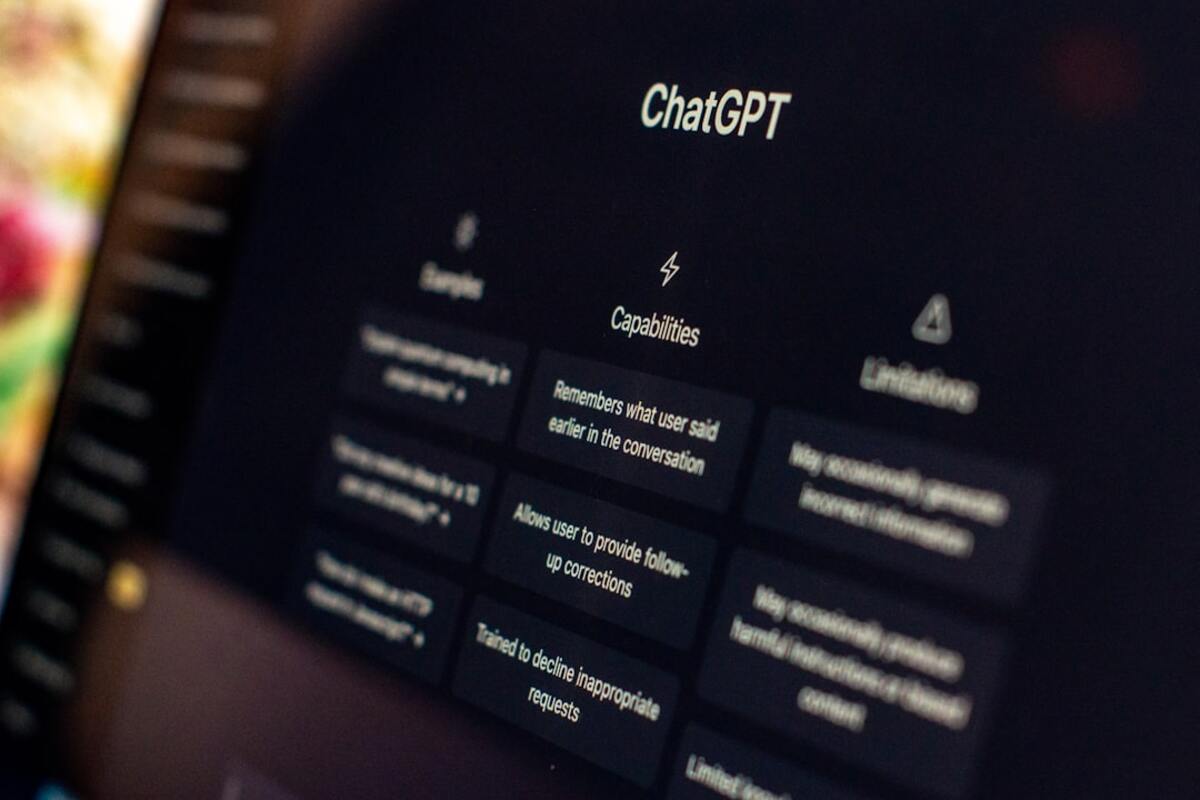
- Use prompt chips to guide AI inputs without forcing users into a modal or complex form.
- Design chips with clear tokens, states, and constraints to prevent prompt chaos.
- Ship accessible, fast chips by planning focus, semantics, and performance from the start.
What Are Prompt Chips and Why They’re Replacing Giant Text Areas
AI features have landed in everything from docs to dashboards, but the interface patterns around them are still settling. The promise of a single, open text box is appealing—write whatever you want and the system figures it out. In practice, unlimited input creates confusion, inconsistent outputs, and UI clutter. Prompt chips offer a simple way out. They transform intent into small, interactive tokens that users can combine, edit, remove, and re-order without switching context.
Think of prompt chips as an inline, composable language. Instead of asking users to write “Summarize this report in 3 bullet points, focus on Q3 revenue, tone: confident,” they can select chips like “Summarize,” “3 bullets,” “Focus: Q3 revenue,” “Tone: confident.” This helps new users get started, gives experts a fast track, and provides your system with structured inputs to improve results. Chips are not only for AI generation: they’re equally useful for filtering, transforming, and constraining AI outputs in-place.
Prompt chips work because they carry context. A chip can hold a label (visible), metadata (hidden), and validation rules (stateful). When chips are designed well, users get the best of both worlds—freeform power with guardrails. When designed poorly, chips become brittle badges that block exploration. The difference lies in intentional structure, consistent motion, and well-considered affordances.
There are three scenarios where prompt chips shine:
- Inline authoring: Users assemble a prompt alongside their content without opening a modal.
- Interactive constraints: Users tweak scope, tone, or length while seeing immediate output changes.
- History as chips: The system suggests chips from prior sessions, making iteration faster and more consistent.
Rather than inventing a full DSL for your AI feature, start with a handful of chips that map to real user outcomes. Each chip should have a crisp purpose, a small set of variants, and an obvious default. As your product grows, chips become an extensible vocabulary you can scale across surfaces.
| Chip | Purpose | States | Sample Metadata |
|---|---|---|---|
| Tone | Adjust voice of generated content | default, selected, editable, invalid | {"values":["friendly","formal","confident"]} |
| Length | Control output size | default, selected, disabled | {"min":50,"max":300,"unit":"words"} |
| Focus | Prioritize a topic or entity | default, selected, removable | {"entityId":"Q3Revenue","weight":0.8} |
| Format | Pick structure | default, selected | {"type":"bulleted","count":3} |
| Source | Constrain to a dataset | default, selected, locked | {"dataset":"Sales_2024_Q3"} |
Notice that each chip has a visible label and a private payload. The label is for humans; the payload is for the model. The best chips translate that payload into consistent prompts or system messages without exposing internal jargon to the user.

Interaction Patterns That Make Chips Feel Native
Prompt chips succeed or fail on microinteractions. If they feel like mini forms pasted into your UI, they will slow users down. If they feel like light, predictable building blocks, they will become a natural part of the workflow. These patterns help you design chips that feel at home in your product.
Entry points should be contextual and non-blocking. Use inline “+ Add” affordances near the content being transformed, or offer a small palette that appears on focus with a short list of suggested chips. Avoid full-screen command bars unless discovery is more important than speed. For power users, offer keyboard entry to convert text into chips (e.g., typing “tone: confident” auto-creates a Tone chip).
Selection and editing need to be ruthlessly simple. Clicking a chip toggles its selected state; clicking its icon or caret opens a small menu with options. For chips with freeform values (like “Length”), the value should be editable inline, not sent to a form. Keep the edit surface shallow—one focusable input, two to four options, and immediate feedback. On blur, persist changes and announce them for assistive tech.
Chips should be reorderable only if order matters. For priority-sensitive operations—such as “Summarize then translate”—dragging to reorder can affect output. If order does not matter, disable reordering to reduce cognitive load. When reordering is allowed, show a lightweight drop target and a subtle motion curve (200ms–250ms). Favor CSS transforms and translate3d over layout thrash to keep frames smooth.
State density must remain readable. A common failure mode is stacking several states—selected, locked, invalid, attention, tooltip—onto a small element. Compose states carefully: color is for selection, iconography for type, and outline for warning. Avoid piling on glows and shadows. When in doubt, prioritize contrast and label clarity over embellishments.
Error handling should be course-correcting, not scolding. If a chip’s value is out of range, show the reason inline and suggest a valid range or the nearest value. For unsupported combinations (e.g., “Format: bullets” with “Length: 10 words”), surface a gentle conflict hint that offers to adjust one of the chips. The goal is to shape inputs, not reject them.
Suggestions are where prompt chips become learning tools. Use data from recent sessions to suggest the last three chips a user applied. Add a smart default set for new users—two or three chips that yield a satisfying result quickly. Avoid dumping a long taxonomy into the suggestion list; progressive disclosure beats a dense catalog.
Performance is part of interaction design. Chips should be light in the DOM, with minimal reflow on selection. Batch state updates and layout changes. Debounce expensive re-renders in frameworks, and prefer CSS for animations. If you virtualize long chip rows, ensure keyboard navigation remains continuous across virtual boundaries.
Below is a practical rhythm for chip interactions that keeps focus and feedback intuitive:
- On add: Focus lands on the new chip’s primary control; announce “Tone chip added, default: friendly.”
- On edit: Apply optimistic UI; update preview immediately while the model recalculates.
- On remove: Return focus to the nearest neighbor; announce “Length chip removed.”
- On conflict: Offer one-click fix (“Adjust to 3 bullets?”) with undo stack support.
A final note on motion: microinteractions should be assistive, not decorative. Use easing curves that communicate physics—ease-out for entry, ease-in for exit—and cap durations at 250ms. Respect reduced motion preferences by disabling non-essential transitions and replacing them with opacity or instant state changes.
From Figma to Production: Systemizing Prompt Chips
To scale prompt chips across your product, build them as first-class citizens in your design system. Resist the urge to treat them as stylized tags. Chips are structured objects with variants, behaviors, and data contracts. A systematic approach reduces inconsistent behavior and improves model alignment.
Start by defining tokens. At minimum, you need color tokens for default, hover, selected, disabled, and danger; spacing tokens for chip padding and gap between chips; and depth tokens for focused and hovered states. Add motion tokens for add, remove, and reorder. If your system uses semantic color steps, bind chips to those rather than hard-coded values to keep contrast ratios safe across themes.
Next, define anatomy. A robust chip contains: container, label, optional icon, optional value, dismiss button, interactive caret for menus, and focus ring. The dismiss button must be keyboard-focusable and labeled (“Remove Tone: confident”). The caret opens a menu built with real buttons or radios—not divs—so screen readers can navigate options naturally. Always persist state to the DOM (aria-pressed, aria-selected) alongside visual affordances.
Validation rules belong in the component, not scattered across feature code. That means min/max ranges, allowed combinations, and disallowed sequences live with the chip and expose events (“invalidvalue”, “conflictwith:format”). Encapsulating validation prevents drift when multiple teams adopt chips on different surfaces.
Internationalization introduces subtle challenges. Labels must be concise, localizable, and resilient to text expansion. Provide width strategies that wrap gracefully rather than truncating critical meaning. Where possible, prefer icons with tooltips to reduce label translation weight—but don’t rely on icons alone for meaning. For chips with dynamic values, keep units localized (“words,” “characters”) and ensure number inputs follow locale formatting.
Accessibility is essential because chips are dense, interactive elements. Use semantic HTML where possible: buttons for actions, list semantics for chip rows, and ARIA roles only to enhance—not replace—native roles. Map keyboard behaviors clearly: Tab into the chip row, Arrow keys to move between chips, Enter/Space to activate, Delete/Backspace to remove when the remove control is focused, and Esc to close menus. If chips are reorderable, expose a move mode with keyboard shortcuts (e.g., Ctrl+Arrow) and announce position changes via aria-live.
Privacy and security considerations often get overlooked. Chips sometimes imply data scope (like “Source: Sales_2024_Q3”). Treat that scope as sensitive metadata. Ensure you don’t send user-identifiable or restricted labels to analytics. In logs, capture generic events like “source_chip_selected” rather than the dataset name. Provide a Locked state for chips that represent compliance constraints so users can see why they can’t remove them.
Model alignment is the hidden superpower of chips. Because each chip carries structured payloads, you can route them into clearer system prompts. For example, a Tone chip might set a system message like “Use a confident but concise writing style suitable for executive summaries,” while a Format chip sets a planning step that shapes output structure before content. This separation keeps tokens deterministic and reduces prompt spaghetti in your codebase.
Measure success with a mix of UX and model-facing metrics. Track chip adoption (how many sessions use at least one chip), chip stack length at completion (too long indicates complexity), time to first satisfying output, and frequency of conflicts/resolutions. Pair that with model metrics such as output length variance and instruction-following precision per chip combination. If a chip rarely changes the output or confuses users, retire or rework it.
Here’s a reference mapping to keep design and engineering aligned when you ship chips at scale:
| Design Token | Behavior Contract | Engineering Hook | Example Value |
|---|---|---|---|
| chip.color.selected.bg | Contrast AA on light/dark | data-state="selected" | #E6F0FF / #103B73 |
| chip.motion.add | Entry transform + fade | data-motion="enter" | 200ms ease-out, y:6px→0 |
| chip.focus.ring | Visible at 3:1 contrast | data-focus="true" | 2px outline, offset 2px |
| chip.icon.size | Consistent tap target | — | 16px with 24px hit area |
For designers working in Figma, build chips as master components with properties for: state (default, hover, selected, disabled), density (compact, comfortable), adornments (icon, caret, dismiss), and value (none, inline input, menu). Mirror these in code with component props to avoid parity drift.
Content design completes the system. Chip labels should read like actions or constraints, not internal model lingo. Prefer “Tone” to “Style,” “Focus” to “Topic,” and “Length” to “Word Count,” unless your domain demands otherwise. Write helper text that speaks to intent: “Choose a tone that fits your audience” beats “Select tone value.” For conflict messages, keep it friendly and short: “Bullets work best above 30 words. Adjust length?”
Finally, plan for failure and latency. Add a skeleton state for suggested chips so the UI remains stable as recommendations load. If the model rejects a combination or times out, chips should remain editable; don’t lock the interface. Provide a persistent “Reset” affordance to clear all chips, and support undo for the last three changes. On slow networks, show a subtle activity indicator near the chip row rather than a global spinner, keeping users grounded in context.
Three to five active chips cover most real tasks without overwhelming users. If you routinely exceed seven, you likely have overlapping concepts or missing hierarchy (e.g., a Format chip that bundles sub-options).
Three to five active chips cover most real tasks without overwhelming users. If you routinely exceed seven, you likely have overlapping concepts or missing hierarchy (e.g., a Format chip that bundles sub-options).
No. Offer both. Chips scaffold successful prompts and make iteration fast; a free‑text input remains essential for open‑ended creativity. The best pattern combines chips for constraints with a text field for nuance.
No. Offer both. Chips scaffold successful prompts and make iteration fast; a free‑text input remains essential for open‑ended creativity. The best pattern combines chips for constraints with a text field for nuance.
Bind chips to existing tokens for color, type, radius, and motion. Reuse your badge or tag primitives as a starting point, then extend behaviors. Keep elevation minimal to match the rest of your UI.
Bind chips to existing tokens for color, type, radius, and motion. Reuse your badge or tag primitives as a starting point, then extend behaviors. Keep elevation minimal to match the rest of your UI.