Grid‑Forming Inverters: The Quiet Code Giving Renewables a Backbone
A new class of inverters can behave like virtual generators, bringing inertia, stability, and black‑start skills to wind, solar, and batteries—so the grid stays steady even when the wind drops.
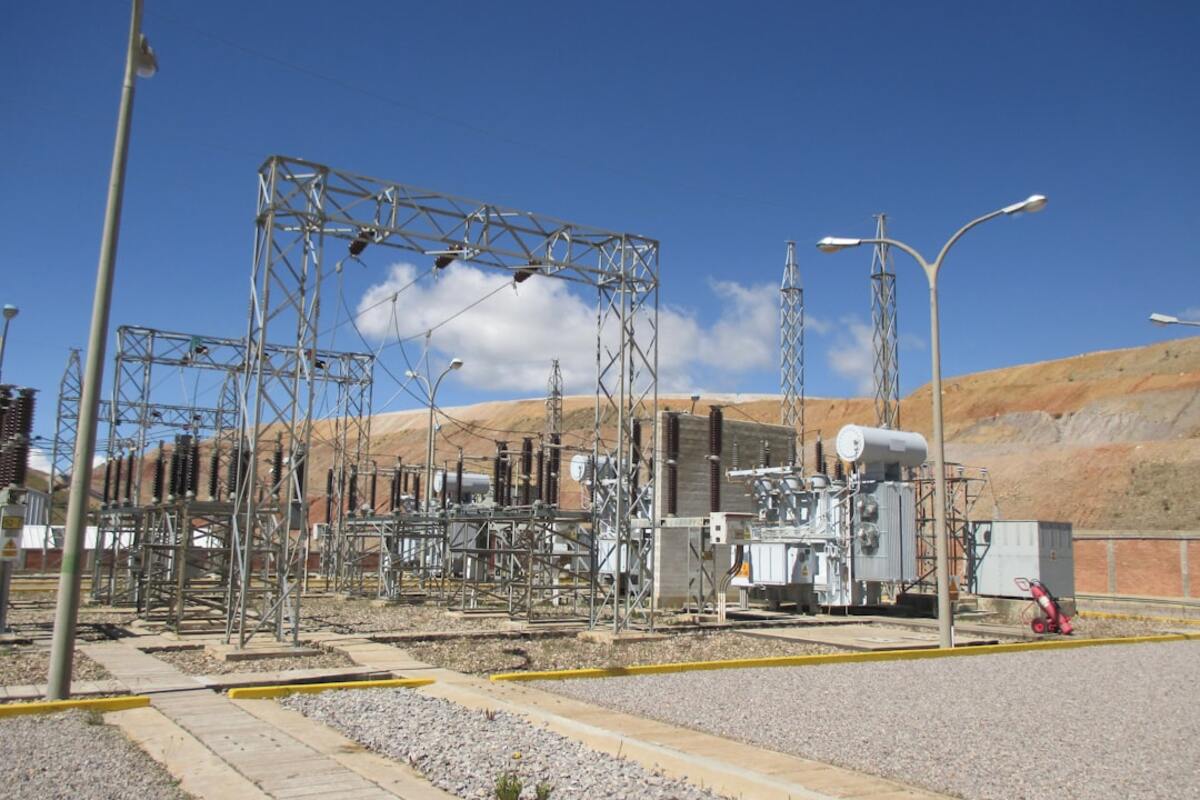
- Grid‑forming inverters act like virtual generators, stabilizing frequency and voltage without spinning mass.
- They enable black start, ride through faults, and support weak grids—key for high renewable shares.
- Pilots on islands, microgrids, and big batteries prove the tech; standards are catching up fast.
Wind turbines and solar arrays now make more electricity than ever, yet the grid they feed was built for spinning machines. Those machines—steam turbines and gas units—brought an often overlooked gift: inertia. When demand suddenly jumps or a line trips, the sheer momentum of heavy rotors buys precious milliseconds while controls catch up. Replace those with digital power electronics, and you can lose that stabilizing buffer. But what if the electronics themselves could act like a generator, holding voltage and frequency steady by design?
That is the promise of grid‑forming inverters. Unlike conventional inverters that simply follow the grid, a grid‑forming unit sets the pace. It can anchor a weak grid, behave gracefully under faults, and even start a dead network from scratch. Quietly, in software, it delivers services once thought to require steel and steam. If you care about a grid that runs on wind, sun, and storage around the clock, grid‑forming control is the missing backbone.
Why the grid wobbles when generators disappear
Traditional power systems relied on synchronous generators—big machines spinning at a tightly controlled speed. Their physics creates a stable rhythm: 50 or 60 hertz. When a disturbance hits, inertia resists sudden changes. Controls then nudge the system back into balance. Inverter‑based resources, like solar and batteries, convert DC to AC through fast switching, guided by control loops. Most of these today are grid‑following inverters; they lock onto an existing grid waveform and inject current accordingly. That’s fine when strong, synchronous machines dominate.
But as rotating machines retire, the “strength” of the grid can fade. Weak grids exhibit low short‑circuit strength, poor voltage control, and hypersensitivity to disturbances. In such conditions, grid‑following inverters can hesitate or even trip. The result is a paradox: plenty of clean generation available, but not enough stability to use it fully.
Grid‑forming inverters flip the script. Instead of waiting for a strong waveform to appear, they create one. Think of them as virtual generators that set frequency and voltage based on an internal model—then adjust power to keep that target steady. They don’t have physical inertia, but they can emulate it (“virtual inertia”) via smart control. And because they react in milliseconds, they can add stability precisely where the grid needs it most.
| Feature | Grid‑Following Inverter | Grid‑Forming Inverter |
|---|---|---|
| Synchronization | Uses PLL to follow an existing grid | Establishes its own voltage and frequency reference |
| Inertia Support | Limited; needs add‑on controls | Built‑in virtual inertia via control loops |
| Fault Ride‑Through | Can struggle on weak grids | Designed to remain stable and support voltage during faults |
| Black Start | Rarely possible | Can energize a dead grid and recruit others |
| Weak Grid Performance | Prone to oscillations and trips | Provides a strong reference, reducing oscillations |
| Typical Uses Today | Most solar, many batteries | Advanced batteries, microgrids, select wind/solar pilots |
| Cost/Complexity | Lower controls complexity | Higher controls sophistication; similar hardware |

How grid‑forming inverters work (without the math)
At their core, grid‑forming inverters run a control strategy that makes their AC output look and behave like a synchronous generator. There are several flavors, each with trade‑offs, but the intuition is approachable.
Virtual Synchronous Machine (VSM): The inverter pretends to be a generator with a “virtual rotor.” When grid frequency dips, it momentarily increases power; when frequency rises, it eases off—just like a heavy flywheel would. This is implemented by translating deviations into power commands using control gains that mimic inertia and damping.
Droop Control: Popular in microgrids, droop sets a simple rule of thumb. If frequency drops by a small amount, the inverter increases active power by a proportional amount (P‑f droop). If voltage sags, it boosts reactive power (Q‑V droop). Multiple units following the same rule share loads smoothly without chatting with each other, which is ideal for modular systems.
Matching/Dispatchable Virtual Oscillator Control: Here, the inverter behaves like a self‑sustained oscillator that naturally synchronizes with neighbors. It’s mathematically sleek, with strong performance in low‑inertia conditions.
Regardless of the flavor, a good grid‑former must do three hard things at once: 1) create a clean voltage waveform, 2) regulate frequency and voltage during disturbances, and 3) limit current to protect its semiconductors. Doing all three is a balancing act. For instance, pushing lots of current into a fault helps the grid recover, but power electronics can only safely deliver so much fault current for so long. That’s why careful current limiting and protection coordination are central to modern designs.
Another often overlooked aspect is interaction. Put many fast‑acting devices on one network and you can accidentally create control “choirs” that sing out of tune. Manufacturers and grid operators test for these control interactions with hardware‑in‑the‑loop simulations and field pilots. The goal is interoperability: different brands of grid‑forming devices that play nicely together and with any remaining synchronous machines.
Where do these capabilities shine today?
- Island grids and microgrids with high renewable penetration, where a few assets must set the tone for the whole system.
- Battery energy storage systems at major substations, providing fast frequency response, virtual inertia, and black‑start pathways.
- Weak grid connection points for wind and solar plants, where grid‑forming controls help unlock full power output without tripping.
Critically, grid‑forming is as much about software and controls as it is about hardware. Many modern inverters already have sufficient transistors, busbars, and filters; they need upgraded firmware, tuned parameters, and compliance testing. That makes the transition cheaper and faster than swapping entire fleets of equipment.
From pilot to playbook: real‑world traction and how to start
Across the world, grid operators and project developers are proving the concept—often in places where the stakes are high. Island power systems, for example, cannot lean on continental neighbors when things go wrong. Microgrids at hospitals and data centers must ride through faults without missing a beat. And large national grids, from Australia to the UK, are running more hours with very low synchronous inertia and need new ways to stay steady.
On islands and remote microgrids, grid‑forming batteries paired with solar have already reduced fuel use and improved reliability. Some systems energize local feeders from black, bring solar online without diesel, and then synchronize to the wider grid when it returns. In these settings, droop‑based control lets each unit carry its fair share without a central brain, which keeps operations robust.
On big grids, batteries with grid‑forming firmware are increasingly providing “system strength” services. Trials have shown improved frequency containment, better behavior during line faults, and controlled islanding of parts of the network when needed. Crucially, some operators have demonstrated black‑start sequences where an inverter energizes a busbar, wakes up a second inverter or renewable plant, and together they bootstrap larger sections of the grid. These are the building blocks of renewable black start—once thought impossible without gas turbines.
Standards and grid codes are catching up rapidly. In North America, IEEE 2800 specifies performance requirements for inverter‑based resources on the bulk power system, including fault ride‑through and voltage/frequency behavior. In Europe, TSOs and ENTSO‑E have released guidance for stability services from power electronics and are adding grid‑forming capabilities to procurement. In Australia, market rules now reward batteries that provide system strength and fast frequency services, with pilot projects informing wide deployment. These frameworks reduce risk for developers by clarifying what “good behavior” looks like.
If you are a developer or facility manager exploring grid‑forming capability, a practical path forward looks like this:
1) Start with a use case, not a buzzword. Do you need black start for a critical facility? Is your interconnection point weak? Are you asked to deliver inertia or system strength? The answer shapes control settings, sizing, and tests.
2) Pick hardware that’s firmware‑ready. Many battery inverters and some wind/solar inverters now offer grid‑forming modes as a software option. Ensure your vendor supports relevant standards and has field references.
3) Model the grid as it will be—not as it was. Run EMT (electromagnetic transient) simulations for weak‑grid conditions, then validate with hardware‑in‑the‑loop tests. Ask vendors for parameter transparency and interaction studies.
4) Plan the operational envelope. Agree on current limits, fault behavior, and islanding sequences with the grid operator. Define when devices switch between grid‑forming and grid‑following modes.
5) Commission in stages and monitor. Start with constrained settings, gather high‑speed data during disturbances, and refine parameters. Remote updates make continuous improvement practical.
As deployments scale, costs fall. Because the leap is mostly in software and engineering rather than raw materials, learning curves are steep. Expect higher value streams too: in many markets, grid‑forming units can stack revenues from fast frequency response, system strength, voltage control, and capacity, on top of energy arbitrage.
No. They reduce dependence on synchronous condensers and turbines, but many grids will use a mix: some synchronous assets, some grid‑forming, and some conventional inverters. The right blend depends on network topology and reliability targets.
No. They reduce dependence on synchronous condensers and turbines, but many grids will use a mix: some synchronous assets, some grid‑forming, and some conventional inverters. The right blend depends on network topology and reliability targets.
Often, yes—but not always. Many modern inverters can run grid‑forming modes with new firmware and parameter tuning. However, protection settings, filters, and transformers must be compatible. Older hardware may lack headroom for controlled fault currents.
Often, yes—but not always. Many modern inverters can run grid‑forming modes with new firmware and parameter tuning. However, protection settings, filters, and transformers must be compatible. Older hardware may lack headroom for controlled fault currents.
No. A strategic fraction—placed at key buses and substations—can anchor larger areas. Studies show that a modest share of grid‑forming capacity, complemented by good network planning, can enable very high renewable penetration.
No. A strategic fraction—placed at key buses and substations—can anchor larger areas. Studies show that a modest share of grid‑forming capacity, complemented by good network planning, can enable very high renewable penetration.
Protection coordination changes, but safety improves with visibility. Grid‑forming units supply controlled fault currents and hold voltage steady, which helps relays operate as designed. Commissioning includes detailed protection studies to avoid nuisance trips.
Protection coordination changes, but safety improves with visibility. Grid‑forming units supply controlled fault currents and hold voltage steady, which helps relays operate as designed. Commissioning includes detailed protection studies to avoid nuisance trips.
Looking ahead, the roadmap is clear. As wind, solar, and batteries take center stage, grid‑forming controls will move from pilots to default settings. Wind turbines with built‑in grid‑forming modes are emerging, reducing the need for separate stabilizing equipment. Utility‑scale storage is increasingly specified for system strength and black start, not just energy shifting. And hybrid projects—solar co‑located with batteries—are being designed to operate as a single, grid‑forming plant.
For communities, the benefits are tangible. Fewer outages when a line trips. Faster recovery after storms. More local generation integrated without expensive wires. And for operators, a richer toolkit to balance the system in real time, even at moments of record‑low synchronous inertia. In short, we can keep the lights steady with code, not just with copper and steel.
If the first wave of renewables taught us how to make clean electrons cheaply, the next wave is about teaching those electrons to behave. Grid‑forming inverters do exactly that—quietly, relentlessly, and in milliseconds—so the clean energy future feels as solid as the old one, only smarter.