Vehicle‑to‑Home (V2H): How a Bidirectional EV Charger Keeps Your Essentials Running
A beginner-friendly guide to Vehicle‑to‑Home (V2H), showing how a bidirectional EV charger can keep your lights, fridge, and Wi‑Fi on, what hardware you need, costs, safety, and which cars already support it.
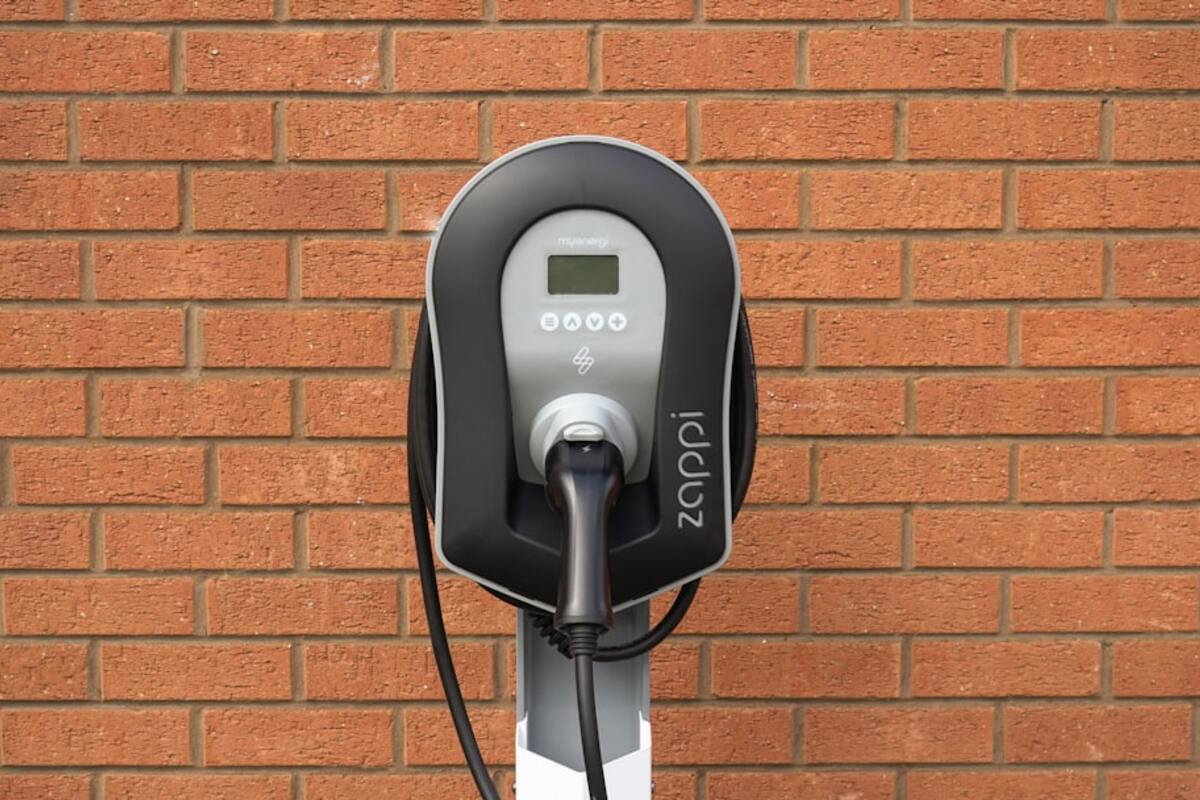
- V2H lets your EV act like a home battery through a bidirectional charger and transfer switch.
- Support depends on both the car and the charger—compatibility is brand- and standard-specific.
- A proper install can power critical loads for days, but plan circuits, costs, and safety first.
Why V2H Is Suddenly Everywhere
Power outages, extreme weather, and rising electric rates have turned backup power from a luxury into a household plan. If you already drive an electric vehicle, there is another twist: the biggest battery on your property might be sitting in your driveway. Vehicle‑to‑Home (V2H) lets that battery do double duty. With a bidirectional charger and a transfer switch, your car can safely power selected circuits during an outage and, in some setups, help you save money by shifting when your home draws from the grid.
What sounds futuristic is now very real. Automakers and charger brands have spent the last few years standardizing hardware, adding safety layers, and aligning with utilities. The result: V2H pilots have become products you can actually buy and install, and more cars are shipping with software support for bidirectional power. For many households, using an EV as backup beats buying and maintaining a separate generator or a stationary battery—especially if you already paid for the capacity on wheels.
This guide walks you through how V2H works, what you need, which cars and chargers support it, and what to expect around costs, performance, and safety. The goal is clarity: plain-English explanations, realistic numbers, and practical steps that make sense whether you rent, own, or manage a small business.

How Vehicle‑to‑Home Works in Plain English
V2H takes stored energy in your EV battery and feeds it back into your house’s electrical system using a bidirectional charger and a safe isolation device. Think of it like reversing the usual flow. On a normal day, a Level 2 charger pulls AC from your panel and converts it to DC to charge your car. In V2H, the charger can also convert DC from your car back to AC and push it into your home’s circuits.
The most important ingredient is islanding—automatic separation from the utility grid. During an outage, standards require that your system stops exporting to the grid so line workers aren’t endangered. V2H systems include a transfer switch or gateway that disconnects your home, then energizes only the circuits you designate. When the grid returns, the gateway synchronizes and switches you back.
There are three common ways energy flows from an EV today:
- V2L (Vehicle‑to‑Load): A 120V or 230V outlet on the vehicle supplies portable power for tools or an extension cord. Handy, but not wired into your home.
- V2H (Vehicle‑to‑Home): A bidirectional charger connects to your home panel through a transfer device, powering selected circuits safely.
- V2G (Vehicle‑to‑Grid): Your EV exports to the grid to help stabilize it, often via utility programs. V2G includes V2H capabilities, but adds utility coordination and interconnection.
In a typical V2H setup, you’ll choose a critical loads panel—a subpanel that feeds key circuits like the fridge, Wi‑Fi, select lights, a gas furnace fan, or a heat pump in eco mode. Whole‑home backup is possible but requires higher power ratings and careful load management, which can raise costs.
Compatibility matters. There are two main fast‑charging standards cars use for bidirectional power: CHAdeMO (pioneered by Nissan) and CCS/ISO 15118‑20 (rapidly becoming the standard for new models in North America and Europe). Your car and your wall charger must speak the same language. Newer vehicles and chargers are converging on CCS with built‑in bidirectional support, while some legacy models rely on CHAdeMO solutions.
| Component | What It Does | Typical Specs | Ballpark Cost (USD) |
|---|---|---|---|
| Bidirectional EV Charger | Converts DC from EV to AC for home; also charges EV normally. | 3.6–11 kW V2H output; CCS or CHAdeMO | $3,500–$7,000 |
| Transfer Switch/Gateway | Isolates home from grid; routes power to selected circuits. | Automatic; 100–200 A service compatible | $1,200–$3,500 |
| Critical Loads Subpanel | Feeds essential circuits for backup operation. | 6–12 circuits typical | $300–$900 |
| Installation & Permits | Professional electrical work; inspections; utility approvals. | Varies by region | $1,500–$5,000 |
Numbers vary by house size, regional labor rates, and whether your main panel needs an upgrade. If your service is already near its limit, your electrician may recommend a load management device or a service increase.
What You Need to Install It
Start by checking your vehicle’s support status. As of 2025, several models and ecosystems have announced or delivered V2H capability:
- Nissan LEAF (CHAdeMO): Supported via certified bidirectional chargers (e.g., certain Fermata Energy and similar units in approved regions). Availability varies by utility and certification.
- Ford F‑150 Lightning (CCS): With the Home Integration System (via Ford/partners), supports home backup and load shifting when configured.
- GM Ultium lineup (CCS): Select models (e.g., Silverado EV) marketed with GM Energy home ecosystem offering V2H; check current firmware and hardware availability.
- Kia EV9 and select Hyundai/Kia models (CCS): V2H functionality rolling out with compatible bidirectional chargers and software updates in specific markets.
- Other models: VW and others are piloting CCS bidirectional features aligned with ISO 15118‑20; rollout depends on regional approvals.
Always confirm with the automaker and the charger manufacturer: even if the hardware looks right, firmware, region, and utility approvals can affect whether V2H is enabled on your VIN today. Automakers sometimes stage releases by model year or market.
Next, talk to a licensed electrician who has V2H experience. They will review your service size (e.g., 100A vs. 200A), panel space, grounding, and bonding; assess whether a critical loads panel is advisable; and map your essential circuits. This visit also identifies code requirements, permit needs, and any necessary utility notifications.
Choosing what to power is a planning step that pays off later. Here’s a simple way to prioritize:
- Must‑run: fridge/freezer, Wi‑Fi/modem, a few LED lights, phone/laptop charging, medical devices.
- Nice‑to‑have: microwave, gas furnace fan or boiler pump, sump pump, garage door opener, induction cooktop at low settings.
- Power‑hungry: central AC or heat pump on eco mode, electric water heater (consider disabling), EV charging (pause during outage), dryers/ovens (usually excluded).
Many households find that 2–5 kW continuous power is enough for must‑run loads, with brief surges when a pump or compressor starts. V2H chargers are typically rated between 3.6 kW and 11 kW, but your continuous draw should stay comfortably below the rating.
Here’s a practical mental model for runtime. Suppose your EV has a 77 kWh usable battery. If your critical loads average 1.2 kW (about 29 kWh/day), you could, in theory, run for a bit over two and a half days. If you get that average down to 0.6 kW (about 14 kWh/day) by cycling appliances and using eco modes, you could stretch beyond five days, weather permitting.
Installation steps usually look like this:
- Site survey and load calculation by the electrician.
- Permitting and, where required, utility interconnection notification for anti‑islanding equipment.
- Mount bidirectional charger and run conduit to panel area.
- Install gateway/transfer switch and a critical loads subpanel; migrate selected circuits.
- Commissioning: system tests, firmware updates, and homeowner training.
Expect the physical work to take one to two days once permits are approved, though scheduling and inspections can extend the calendar time. If you’re adding rooftop solar, many homeowners coordinate both projects so the gateway supports solar during outages, allowing the EV and the array to share duties—subject to the gateway’s design and local rules.
Everyday Use, Costs, and Smart Settings
A well‑designed V2H system is set‑and‑forget during outages. But there are also daily and seasonal features worth understanding.
Time‑of‑Use (TOU) arbitrage: In some markets, electricity is much cheaper at night. If your utility plan allows and your car warranty permits, you can charge the EV during off‑peak hours and power your home during peak hours. Keep an eye on battery cycling limits; some automakers set explicit policies around using traction batteries for stationary purposes.
Demand management: If your home has a high main breaker rating but limited headroom, a smart gateway can temporarily shed lower‑priority loads when the oven or heat pump kicks in. This prevents nuisance trips and extends runtime during a blackout.
Seasonal tips: In summer, favor fans over central AC and use a dehumidifier only when necessary. In winter, prioritize a high‑efficiency heat pump or a gas furnace fan rather than resistive space heaters. Small tweaks cut average draw dramatically.
What about costs? Here is how a typical bill might stack up: a mid‑range bidirectional charger around $4,500, a gateway $2,000, installation and permits $2,500, and a subpanel $600. That totals roughly $9,600 before incentives. Regional rebates can reduce this—especially programs focused on resilience, load management, or electrification. Some utilities offer additional credits if you agree to let them briefly tap your EV during grid emergencies, which effectively turns your setup into V2G for those events.
Runtime expectations by load type:
- Fridge/freezer: 1–2 kWh/day if kept closed and in a cool space.
- Wi‑Fi, phones, laptops: under 0.5 kWh/day with efficient routers and chargers.
- Gas furnace fan or boiler pump: often 0.3–1.5 kWh/day depending on climate and duty cycle.
- Heat pump (efficient, moderate weather): 6–12 kWh/day; more in extremes.
- Sump pump: highly variable—plan for bursts up to 1 kW; averages depend on rainfall.
Multiply averages by your expected outage length to sanity‑check your plan. It’s smart to keep a small, efficient backup light kit and a low‑wattage hot plate for cooking; both sip power compared to ovens.
Battery health and warranties: Modern EV batteries are designed for thousands of charge/discharge cycles at partial depths of discharge. Still, deep daily cycling for home use may not align with your car’s warranty. Always read the fine print. Many automakers are explicit: occasional outage backup is fine; routine heavy cycling for arbitrage may be limited or restricted. Software controls can keep your state of charge (SoC) in a healthy band—say, charging to 80% for driving needs and allowing backup discharge only to 30–40% during outages.
Safety notes you shouldn’t skip: Never improvise a "backfeed" through a dryer outlet or any illegal intertie. Proper V2H uses certified equipment with anti‑islanding and neutral/ground handling built in. Ground fault protection, surge protection, and correct neutrals are non‑negotiable. When in doubt, ask your electrician to walk you through the one‑line diagram so you can see exactly how power flows in each mode.
Apartment and condo reality: V2H is harder in multifamily buildings because you don’t control the main service. But some buildings are starting to add shared bidirectional chargers in the garage with designated backup circuits for common areas (elevators, emergency lighting) or for specific units via submetering agreements. If you’re on a condo board, ask your electrical engineer about a gateway at the meter stack level.
Small business use: For cafés, clinics, and corner stores, V2H can keep point‑of‑sale, refrigeration, and networking alive long enough to avoid spoilage and closures. A delivery van or employee EV with bidirectional support might cover a critical load panel during short outages, especially if your utility experiences frequent momentary interruptions.
FAQs
In most regions, yes—provided you use certified equipment and pull the proper permits. The crucial part is anti‑islanding protection and a transfer mechanism that cleanly separates your home from the grid during outages. Your electrician and local authority having jurisdiction (AHJ) can confirm the exact requirements and standards that apply to your address.
In most regions, yes—provided you use certified equipment and pull the proper permits. The crucial part is anti‑islanding protection and a transfer mechanism that cleanly separates your home from the grid during outages. Your electrician and local authority having jurisdiction (AHJ) can confirm the exact requirements and standards that apply to your address.
Often, yes. Many gateways support both solar and V2H during outages, keeping panels energized in an islanded mode. The details depend on your inverter type (string, microinverter, or hybrid), the gateway model, and local grid codes. Ask for a system design that explicitly shows how solar, the EV, and loads interact in both grid‑connected and backup modes.
Often, yes. Many gateways support both solar and V2H during outages, keeping panels energized in an islanded mode. The details depend on your inverter type (string, microinverter, or hybrid), the gateway model, and local grid codes. Ask for a system design that explicitly shows how solar, the EV, and loads interact in both grid‑connected and backup modes.
For critical loads, many EVs can cover one to five days, depending on battery size and usage. A 60 kWh pack at 12 kWh/day provides roughly five days; a 100 kWh pack at 20 kWh/day gives about five as well. Cold weather, heating needs, and frequent door openings for fridges/freezers can raise consumption, shortening runtime. Smart load choices matter as much as battery size.
For critical loads, many EVs can cover one to five days, depending on battery size and usage. A 60 kWh pack at 12 kWh/day provides roughly five days; a 100 kWh pack at 20 kWh/day gives about five as well. Cold weather, heating needs, and frequent door openings for fridges/freezers can raise consumption, shortening runtime. Smart load choices matter as much as battery size.
Using certified, approved V2H equipment in the ways the automaker supports generally does not void warranties. However, routine daily cycling for arbitrage may be limited. Read the warranty statement and look for specific language about bidirectional use, SoC limits, and allowed programs. When in doubt, get written confirmation from the automaker or charger vendor.
Using certified, approved V2H equipment in the ways the automaker supports generally does not void warranties. However, routine daily cycling for arbitrage may be limited. Read the warranty statement and look for specific language about bidirectional use, SoC limits, and allowed programs. When in doubt, get written confirmation from the automaker or charger vendor.
Whole‑home backup is possible with high‑power gateways and careful load management, but it’s not always the best value. Most homeowners save money and extend runtime by backing up only a critical loads panel. If you have large electric heat or a pool pump, consider excluding them or using scheduled windows to avoid draining the EV too quickly.
Whole‑home backup is possible with high‑power gateways and careful load management, but it’s not always the best value. Most homeowners save money and extend runtime by backing up only a critical loads panel. If you have large electric heat or a pool pump, consider excluding them or using scheduled windows to avoid draining the EV too quickly.
Finally, a quick checklist to keep things simple: verify your EV supports V2H; select a charger that matches your car’s standard; plan a realistic critical loads panel; get a clear quote covering gateway, permits, and commissioning; and learn how to switch modes through the app or wall unit. With that in place, your car becomes more than transportation—it becomes a quiet, clean, and remarkably capable backup power source that is already part of your life.