The “Two‑Minute Nature Break”: A Tiny Outdoor Reset That Calms Your Nervous System
You don’t need a hike or a retreat. A two‑minute “nature break” (even by a tree or cloudy sky) can lower stress and sharpen focus fast.
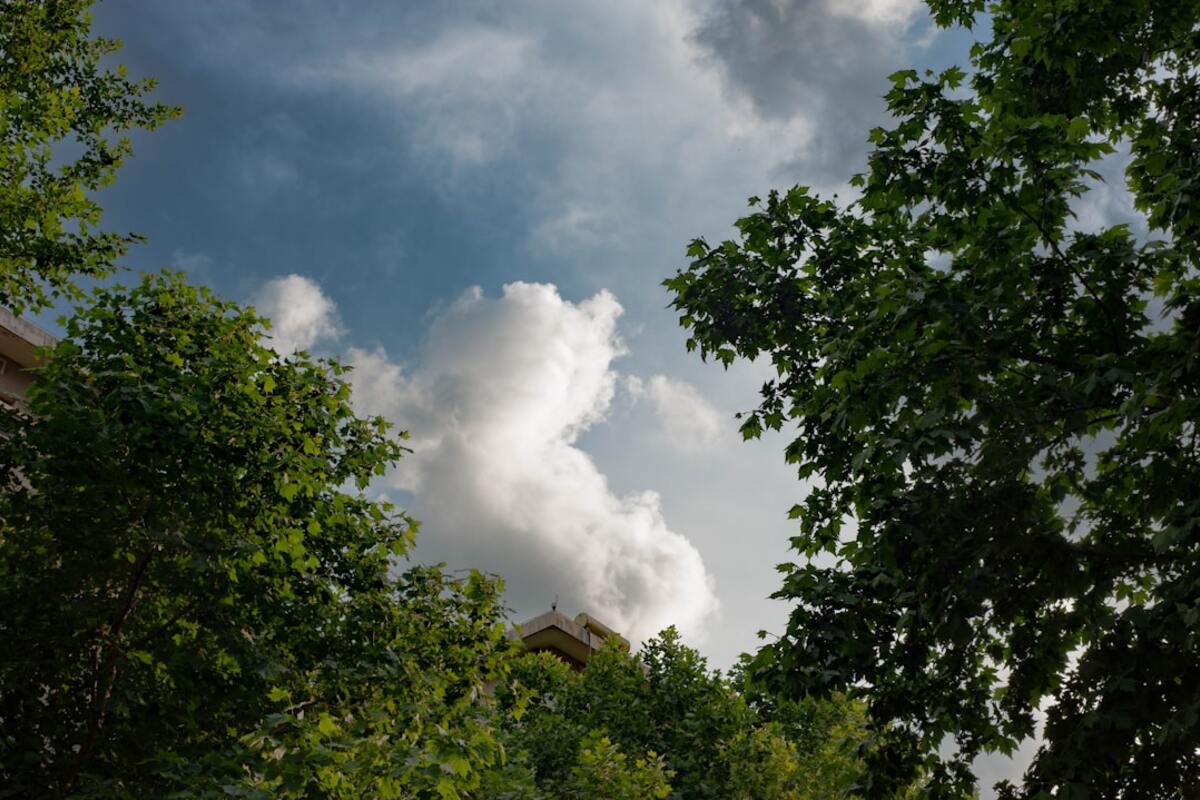
- A “nature break” works best when you use your senses (see, hear, feel) instead of scrolling or multitasking.
- You can get benefits from micro‑doses of outdoors: a courtyard, balcony, street tree, or open window still counts.
- A simple script and a few “if‑then” plans make the habit easy to repeat at work, at home, or between errands.
Why two minutes outside can feel like a reset button
Think about the last time you walked into a noisy room and your body tensed up before you even formed a thought. That’s your nervous system doing its job—scanning, predicting, preparing. The problem is that modern life keeps the scanner switched on: notifications, traffic, tense emails, news headlines, back-to-back tasks. Even when nothing is “wrong,” your body can act like something might be.
A Two‑Minute Nature Break is a deliberately short moment outdoors (or as close to outdoors as you can get) where the only goal is to let your attention rest on natural cues—sky, breeze, leaves, birds, even rain. It’s not a workout. It’s not meditation class. It’s a mini environmental change that tells your brain, “We’re safe enough to downshift for a moment.”
Many people imagine stress relief requires a big commitment: a long walk, a yoga session, a full lunch break, a weekend away. Those are great, but they’re also easy to postpone. Two minutes is different. Two minutes is what you can do between meetings, while the kettle boils, during a bathroom break, or after dropping a child at school.
Here’s a real-life scenario you might recognize: you’ve been staring at a screen, your jaw is clenched, and your thoughts are skipping ahead (“I still need to reply to… and then I have to… and what if…”). You step outside, and the air feels cooler than you expected. A bird makes an absurdly loud sound for something so small. The sky is doing its own thing—clouds sliding by like slow-moving ships. Your shoulders drop a fraction. You didn’t solve your problems, but you returned to your body.
This works partly because nature tends to offer soft, non-demanding attention. A spreadsheet demands. A message pings. A bird doesn’t require you to respond. Leaves move without asking you to do anything about it. Your brain gets to take its finger off the “urgent” button.

How to do the Two‑Minute Nature Break (the simple script)
The best version is the one you’ll actually repeat. This method is intentionally lightweight: no special clothes, no tracking required, no perfect calm needed. You’re just giving your senses a short, natural “feed” instead of another digital one.
Step 1 (10 seconds): Move to “real air.”
Go outside if possible: doorstep, balcony, courtyard, parking lot, sidewalk. If you truly can’t, stand by an open window and treat it like the outdoors is visiting you.
Step 2 (60 seconds): Pick one sense and stay with it.
Choose one: sight, sound, touch, or smell. Single-sense is easier than trying to do everything at once.
- Sight: watch the movement of clouds, tree branches, raindrops, or shifting light on a wall.
- Sound: listen for the furthest natural sound you can detect (wind, birds, distant rain), then the closest.
- Touch: notice temperature on your skin, air moving in and out of your nose, the feel of your feet inside your shoes on the ground.
- Smell: notice damp pavement, cut grass, a plant, or simply “cold air” vs “warm air.”
Step 3 (40 seconds): Add one slow exhale.
You don’t need a breathing technique. Just make one exhale a little longer than your inhale—like fogging a mirror gently. If your mind wanders, fine. Come back to the sky, the tree, the breeze.
Step 4 (10 seconds): Name the change.
Quietly label one difference you notice: “My forehead feels less tight,” “My thoughts slowed down,” “My chest feels open,” or even “I’m still stressed, but less buzzy.” Naming it helps your brain register the shift.
If you want a quick phrase to guide the whole thing, use: “Look, listen, exhale.” Three words. No fuss.
To make it easier to remember, borrow a trick from habit research: attach it to something you already do.
| Existing moment | Two‑minute nature break trigger | What it looks like |
|---|---|---|
| After a meeting ends | Before opening the next tab | Step outside and watch the sky for 60 seconds, then one long exhale |
| Waiting for coffee/tea | Kettle or machine running | Stand at the door, feel the air on your face, listen for the furthest sound |
| Lunch break | Before eating | Take two minutes near a tree or window; notice movement and light |
| End of workday | After closing laptop | Walk outside, feel your feet on the ground, exhale slowly twice |
Important note: the goal is not to feel blissed out. The goal is to interrupt the stress loop. If all you get is “I feel 10% less tense,” that’s a win—because you can repeat it.
Common obstacles (and how to make it work in real life)
Most wellbeing tips collapse on contact with reality: weather, time, self-consciousness, busy schedules, or the classic “I forgot.” Here are the friction points people hit, and practical ways around them.
Obstacle: “I live in a city. There’s no nature here.”
City nature is still nature. A single street tree. A strip of weeds pushing through a crack. Pigeons being pigeons. Wind between buildings. The point is to give your attention a break from human-made demands. If you can see sky, you can do this.
Try this: stand still and look for movement that isn’t human-made: leaves, clouds, shadows, ripples in a puddle, drifting steam from a vent. Let your eyes follow it without doing anything else.
Obstacle: “I’m at work. It feels awkward.”
You don’t have to look poetic. You can look like you’re taking a normal breather. The simplest “socially invisible” version: walk to the door, step out, check the sky like you’re checking the weather, take one long exhale, return.
Try this: make it a functional excuse: “I’m going to get some air” is widely acceptable in most workplaces. If not, do the window version—face the light, soften your gaze, listen for 30 seconds.
Obstacle: “Two minutes won’t change anything for me.”
Two minutes won’t fix your job, your relationship, or your inbox. But it can change your state—and state affects what you do next. When your body is less revved, you’re more likely to write a calmer email, make a better food choice, or stop doom-scrolling.
Analogy: it’s like rinsing a cup between drinks. The cup is still the same cup, but the next drink tastes different.
Obstacle: “I step outside and immediately grab my phone.”
You’re not weak; you’re trained. Your phone is a portable slot machine. The nature break works best when you remove the competing stimulus.
- Leave your phone on your desk and tell yourself you’re doing a “two-minute check of the weather.”
- If you must bring it (safety, parenting), set it to airplane mode for two minutes.
- Give your hands a job: hold a warm mug, touch a railing, or put one hand on your chest during the long exhale.
Obstacle: “Bad weather ruins it.”
Weather can actually make the break more sensory. Rain has texture. Cold air is vivid. Wind is instantly noticeable. If it’s genuinely unpleasant or unsafe, do the threshold version: stand in a doorway, under an awning, or by an open window and focus on sound and temperature.
Obstacle: “My mind is too loud.”
That’s often when you need the break most. You don’t have to silence thoughts. Just give them a softer background.
Try this: count five natural things you can see (cloud, leaf, shadow, bird, raindrop marks). Then stop counting and simply watch one of them for a few breaths.
To help you troubleshoot quickly, here’s a short “menu” of versions—pick one based on your day, not your ideal self.
Step outside (or to a window), look at the farthest point you can see (top of a building, a cloud, a treetop), then do one slow exhale. That’s it.
Step outside (or to a window), look at the farthest point you can see (top of a building, a cloud, a treetop), then do one slow exhale. That’s it.
Do a “sky break” from indoors: stand near a window, soften your gaze, and watch light and shadow for a minute. Add one long exhale. If there’s no window, use a plant, a bowl of water with light reflections, or even a nature sound for one minute—still focusing on a single sense.
Do a “sky break” from indoors: stand near a window, soften your gaze, and watch light and shadow for a minute. Add one long exhale. If there’s no window, use a plant, a bowl of water with light reflections, or even a nature sound for one minute—still focusing on a single sense.
Start with once per day, tied to a reliable cue (after your first meeting, after lunch, or when you shut your laptop). If you like it, add a second one during your most stressful time window.
Start with once per day, tied to a reliable cue (after your first meeting, after lunch, or when you shut your laptop). If you like it, add a second one during your most stressful time window.
One more practical tip: if you want this to stick, make it ridiculously easy to start. Put your shoes by the door. Keep a jacket at your desk. Choose a “spot” (the same tree, the same corner, the same patch of sky). When the decision-making is removed, the habit becomes almost automatic.
And if you’re someone who likes a tiny challenge, try a “nature detail hunt” for a week: each day, notice one small thing you’ve never noticed before—new buds on a branch, the way wind changes direction, the color gradient in the evening sky, the pattern of raindrops on pavement. It’s the same two minutes, but it gives your brain a gentle mission that isn’t work.
In a world that constantly asks for your attention, the Two‑Minute Nature Break is a small way to take it back—without needing perfect conditions, special gear, or a big block of time.